
Energy healing is a group of complementary wellness practices based on the idea that life energy supports balance in mind, body, and spirit. Reiki is one form of energy healing, often chosen for a peaceful space to rest and release stress.
If you are new to energy healing, the language can feel unfamiliar. You might wonder what energy means, what a practitioner actually does, or whether you need to believe something before trying a session. Those are welcome questions. You do not need to arrive with special knowledge or a perfectly clear intention.
This guide explains the broader idea of energy healing, then looks more closely at Reiki and what receiving a session can be like. The starting point is simple: curiosity, comfort, and permission to slow down.
What does “energy” mean in energy healing?
In energy healing traditions, energy usually means a subtle life force. Different traditions have different names and ways of describing it. Reiki uses the language of universal life energy. Other approaches may speak about qi, prana, or an energy field. These concepts belong to their respective traditions and are not interchangeable in every detail.
In Reiki teaching, the practitioner is understood to act as a channel for universal energy. The intention is to support harmony and create space for rest and release. This is a traditional understanding of the practice, rather than a measurement of the body's electricity or a medical explanation of illness.
You may find this language meaningful, or you may prefer to focus on the experience itself: lying comfortably, stepping away from demands, and noticing how you feel. Both starting points leave room for a gentle session. You do not have to adopt someone else's spiritual language to ask practical questions or honor your own beliefs.
What are the different types of energy healing?
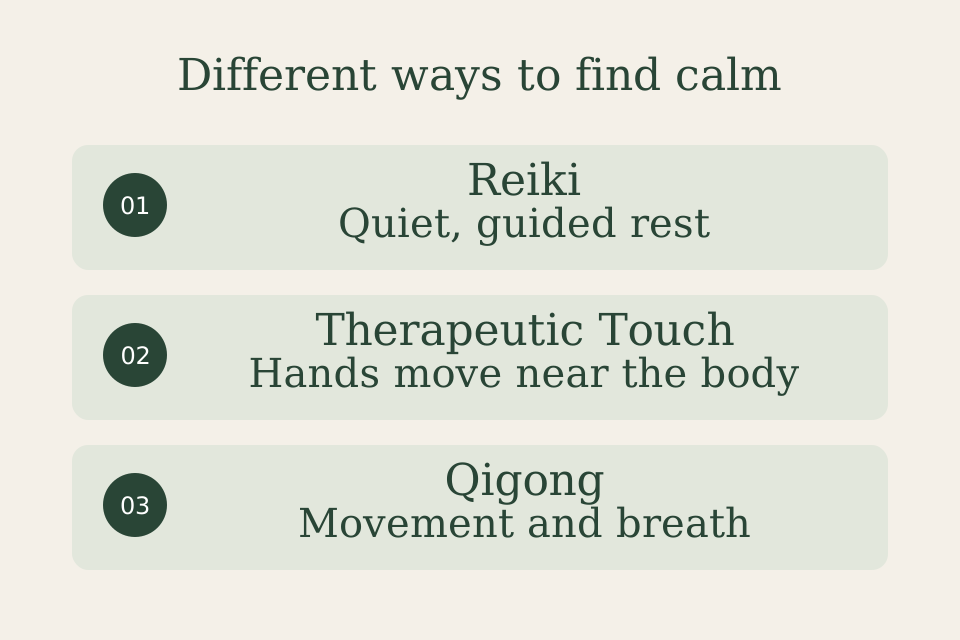
Energy healing is a broad term, not a single technique. Some approaches involve receiving quiet support from a practitioner. Others involve movement, breath, or a more physically active experience. Knowing the method matters more than choosing a session by the umbrella label alone.
Reiki
Reiki is a Japanese practice in which a trained practitioner uses light touch or holds their hands near the body. Sessions are typically quiet, and the recipient remains clothed. At Reiki Therapy Dallas, the approach is mostly hands-off. Reiki does not involve massage pressure, needles, or having to perform a set of movements.
Therapeutic Touch
Despite the name, Therapeutic Touch typically involves hands moving near the body rather than direct touch. It uses its own framework and training. A practitioner should explain what they do and how the session differs from Reiki before you decide whether it fits your preferences.
Qigong and other approaches
Qigong brings together movement, breathing, and focused attention within a Chinese tradition. Acupuncture is sometimes grouped into discussions of energy medicine because of its traditional qi framework, but it involves needles and different professional training. These practices have distinct histories and evidence. An experience or finding about one method does not establish the same result for another.
How Reiki approaches stress and emotional release
In the Reiki tradition, universal energy is understood as a gentle support for balance and the release of stress or emotions that feel held within us. That language can speak to the feeling of carrying too much, especially when you have been busy caring for everyone else.
Perhaps you have moved from one responsibility to the next without a pause. Perhaps you are navigating change and would welcome time when you do not have to explain, plan, or keep going. A Reiki session offers a setting in which rest is the purpose of the appointment.
Emotional release does not have to be dramatic. You might notice a sigh, a few tears, a quieter mind, or a sense of softness. You might simply appreciate the stillness. There is no requirement to uncover a hidden emotion or tell a painful story. Your pace and boundaries matter. Our guide to Reiki for stress relief explores this gentle approach in more detail.
What happens during an energy healing session?
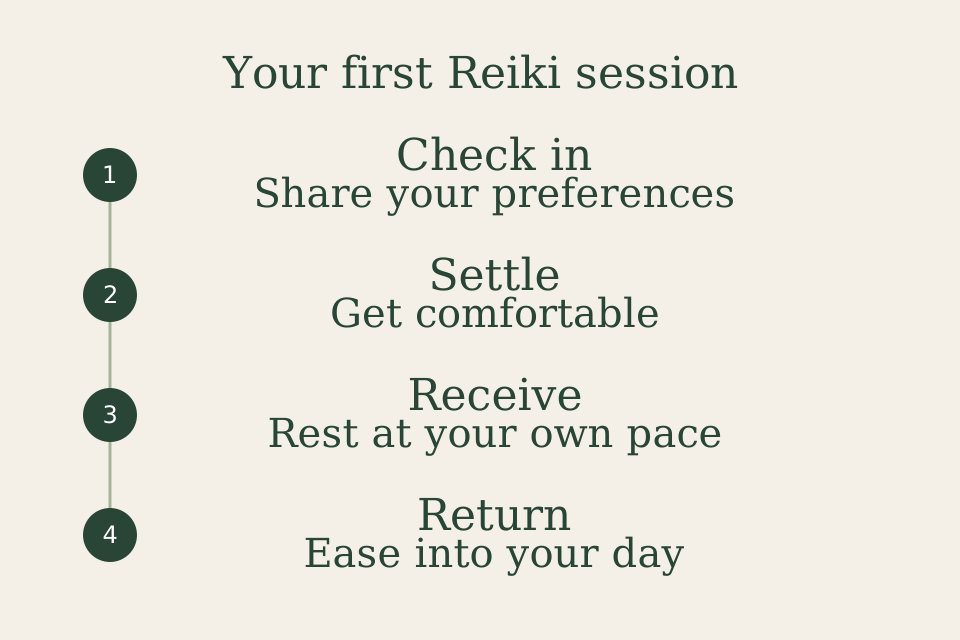
The details depend on the practice and provider. A Reiki appointment usually follows a simple rhythm: a brief conversation, time to get comfortable, the session itself, and a gradual return to the day. You can read the Dallas session overview before booking so there are fewer unknowns.
A conversation about your comfort
The practitioner may ask what brought you in and whether you have preferences about touch or positioning. You can say that you are curious, stressed, or simply ready for a quiet break. You may also keep personal details private. This check-in should help you feel informed, not pressured to disclose more than you want.
Time to settle and receive
At Reiki Therapy Dallas, you remain fully clothed and rest on a treatment table in a private setting. Vicki uses a gentle, mostly hands-off approach. You can close your eyes or keep them open, ask for a position change, or speak if something feels uncomfortable. Stillness is an invitation, not a rule you must obey.
A gentle finish
When the session ends, take a moment before sitting up and moving on. You can share what you noticed, ask a question, or leave the experience quietly with yourself. A thoughtful practitioner does not need to give a dramatic interpretation of your sensations. You are allowed to have your own understanding of the experience.
What might energy healing feel like?
People describe Reiki in many ways. Some notice warmth, a light tingling sensation, heaviness in their limbs, or a deep desire to rest. Others feel emotional or become aware of how tired they have been. Some do not notice much during the session itself.
None of these responses is a test of whether you are receptive enough. You do not have to feel energy moving, fall asleep, or reach a special state. If your mind keeps making lists, you have not failed. You can let thoughts come and go while your body stays supported.
It also helps to separate a sensation from a conclusion. Warmth does not diagnose a problem, and tears do not prove that trauma has been resolved. You can appreciate what you feel without assigning it a medical meaning. The article What Does Reiki Feel Like? offers more reassurance about the wide range of personal experiences.
How to prepare for your first session
Choose comfortable clothing that lets you rest without feeling restricted. Give yourself enough travel time that the appointment does not begin with a frantic rush. If possible, leave a small gap afterward, too. The goal is to make the visit easier on you, not to create an elaborate ritual.
You can bring a simple intention such as “I would like time to rest” or “I am ready to put down some stress.” You can also arrive without one. Avoid turning preparation into another demand on yourself. Special clothing, crystals, or a particular spiritual background are not prerequisites for receiving Reiki.
If lying flat is difficult, or you prefer no touch, raise that before the appointment. Ask what accommodations are available rather than assuming you must tolerate discomfort. For a session received at home, our distance Reiki information can help you understand the format and choose a private place to rest.
How to choose an energy healing practitioner
Look for someone who answers ordinary questions clearly. You should be able to understand the method, the appointment length, the fee, and what happens during the session. A calming atmosphere is welcome, but clear communication is just as important when you are trying something new.
Ask about the practitioner's training and experience with the method they offer. Ask whether touch is involved and how they handle requests to change position or stop. You should never need to earn permission to state a boundary. Consent continues throughout the appointment, even if you agreed to the general approach at the start.
Be cautious of promises to cure illness, guaranteed emotional breakthroughs, or claims that you must buy a large package to avoid harm. A supportive practitioner can welcome repeat visits without making you afraid to leave. You should have space to decide whether a single appointment felt worthwhile before choosing what comes next.
For a Dallas appointment, you can read about Vicki Louise, RN, BSN and explore the available session options. Choose someone whose explanations and manner help you feel comfortable asking questions.
Where energy healing fits in your care
Energy healing can be approached as complementary wellness support. It does not replace medical diagnosis, medication, mental health treatment, or emergency care. If you have symptoms or a health concern, bring those questions to an appropriately licensed clinician.
Cleveland Clinic's overview of energy healing describes several methods and advises using them alongside regular medical care.
You can value time for rest without expecting a wellness appointment to answer every health question. Keep your usual care in place, and ask your clinician about any concerns relevant to the method you are considering. Different energy practices involve different activities, so an answer about Reiki is not automatically an answer about acupuncture or movement-based work.
Give yourself room after the session
Afterward, notice what feels helpful without trying to manufacture a result. You might enjoy a quiet walk, a glass of water, a normal meal, or a few minutes with a journal. You can also return to your day without adding a new routine. There is no required aftercare ritual.
If you write something down, keep it simple: What felt comfortable? Did I appreciate the quiet? Would I like this kind of space again? These questions are more useful than searching for a hidden meaning in every sensation.
A supportive wellness experience should leave room for sensible care and for your own judgment about what your body needs.

Explore energy healing in Dallas through Reiki
At Reiki Therapy Dallas, Vicki Louise, RN, BSN offers private Reiki sessions in a calm Dallas setting, along with chakra balancing and distance Reiki. The fully clothed, mostly hands-off approach gives you room to rest without the pressure to perform or describe a particular experience.
If you are drawn to universal energy language, you can bring that interest with you. If you are simply ready for a peaceful pause, that is welcome, too. Explore Reiki healing in Dallas, read about chakra balancing, or choose an appointment that fits the time you can comfortably set aside.
Frequently asked questions
What is energy healing in simple terms?
Energy healing is an umbrella term for complementary practices based on beliefs about life energy and balance. Reiki is one example. People often seek a session for quiet, relaxation, and a supportive space to release everyday stress, rather than for medical treatment.
Is Reiki the same as energy healing?
Reiki is one form of energy healing. It has its own Japanese roots, training, and approach to universal life energy. Other practices may use different traditions, movement, breath, or touch, so it helps to ask which method a practitioner offers.
Do I need to feel energy for a session to be meaningful?
No. Warmth, tingling, emotion, and deep relaxation are possible experiences, but none is required. You may simply enjoy resting. A quiet session does not mean you did anything wrong, and a strong sensation is not a measure of better results.
Can I receive Reiki without being touched?
Yes. Reiki can be offered with the practitioner's hands held above or near the body. At Reiki Therapy Dallas, sessions are fully clothed and mostly hands-off. Share your preferences before the session and ask for changes whenever you need them.
How do I choose my first energy healing session?
Start with a practitioner who explains their training, approach, fees, and comfort options clearly. Ask what happens during the appointment and whether touch is involved. Choose a manageable amount of time, and keep your regular medical and mental health care in place.
A little space to rest and reconnect.
Your first session can begin with curiosity. Let Vicki guide you through a gentle Reiki experience at your own pace.
Book a Session
